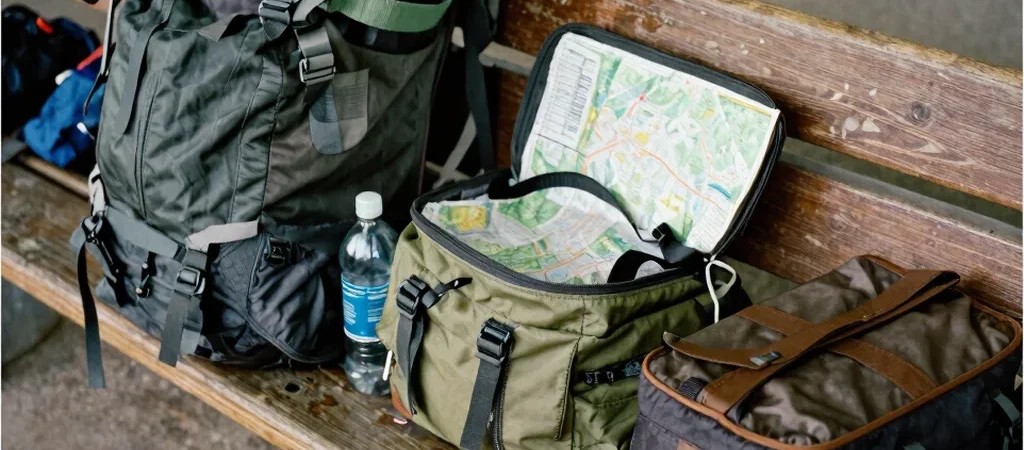
The awkward moment often comes at a station: your rain layer is buried under everything, your day-hike snacks are in the checked bag, and you still have miles to travel before the trail. When a trip combines trekking with ordinary travel, pack for the transitions as carefully as for the hike itself.
Separate what you need
Keep the items you may need in transit—identification, tickets, water, a warm layer, and any essential medication—in a bag you can reach without unpacking. Put trekking gear you won’t need until the trail in a separate compartment or pack, so a station stop doesn’t become a full gear search.
Before leaving, check baggage rules for every flight, bus, or train on the itinerary, especially if the trip uses more than one carrier. Also confirm how your larger pack will be handled; a bag suitable for a trail may be cumbersome in crowded aisles or on local transit.
Match gear to the route
Choose footwear and layers for the terrain and forecast you’ve actually checked, not for a generic idea of the destination. A wet forecast, exposed ridge, or long walk from transit to lodging may change what belongs near the top of your pack.
Do one simple rehearsal: pack everything, then take out what you won’t use on the route or during the travel day. If you can reach your weather layer, water, and navigation without emptying the bag, you’re set up to move between the two parts of the trip with less fuss.