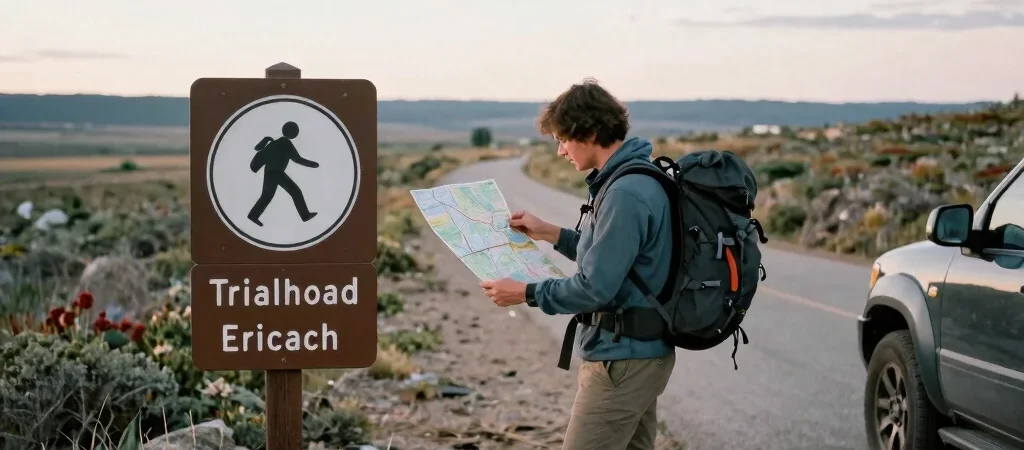
The trail description says six miles, but the parking area is a long drive from your lodging and the last stretch of road may be rough. That’s why a useful trekking plan starts at the trailhead, not with the mileage alone. Work outward from how you’ll get there, what you’ll find on arrival, and when you need to turn back.
Trace the whole approach
Check the route to the trailhead as carefully as the route on foot. Look for access restrictions, seasonal road closures, parking limits, and whether a shuttle or advance reservation is required; the land manager’s current notices are a better guide than an old trip report.
Then account for the parts that maps tend to flatten: time to find the right entrance, organize your pack, and get everyone moving. If your plan depends on arriving just before a shuttle leaves or reaching a remote trailhead after dark, build in another option.
Set a useful turnaround
Mileage is only one measure of effort. Elevation gain, uneven footing, exposure, heat, and the weight in your pack can all change how a route feels, so compare the trail description with your group’s experience and the day’s forecast.
Choose a turnaround time before you start, using daylight and the return journey to set the boundary. If conditions change or progress is slower than expected, turn back while the decision is still straightforward. A good trekking plan leaves room to adjust rather than treating the map as a promise.